What Your Check Engine Light Is Actually Telling You
A lit dashboard warning can mean almost anything, so here's what it really means once a technician plugs in and reads the code.
September 23, 2026 · 3 min read
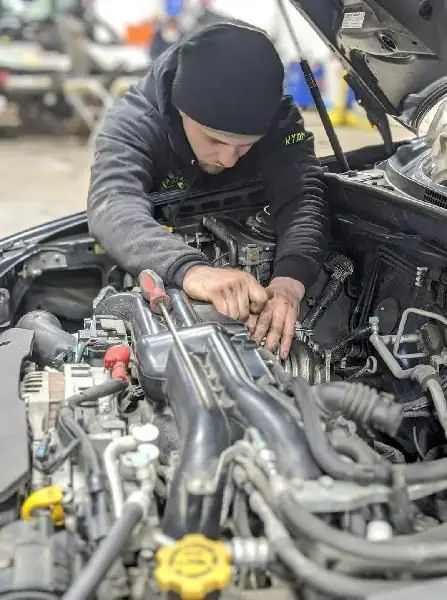
The light means the computer noticed something
Every car built in the last few decades runs on a network of sensors that watch things like oxygen levels in the exhaust, engine temperature, and fuel trim, along with dozens of other values most drivers never think about. When one of those sensors reports a reading outside its normal range, the vehicle's computer turns on the check engine light. That's really all the light means on its own: something is outside spec somewhere in the system.
A trouble code points to an area, not a part
When a technician connects a scan tool, the computer hands back a diagnostic trouble code, or DTC. A DTC narrows things down to a general area, say the fuel system or a specific cylinder, and gives the technician a place to start looking. It rarely names the exact failed part on its own. From there, the technician still has to physically and visually examine that part of the car, test components, and confirm what's actually wrong before ordering parts or starting a repair. Anyone who tells you the code alone tells the whole story hasn't done this kind of work for very long.
A few of the usual suspects
Some of the more common reasons a check engine light comes on include a gas cap that isn't fully tightened, which lets fuel vapor escape and throws off the emissions system. An aging oxygen sensor can trigger it too, as its readings drift out of range over time, and so can a spark plug or ignition coil starting to wear out, which can show up alongside a rough idle or a slight loss of power. None of these are things you can tell apart just by looking at a dashboard light. They all start with the same first step: read the code, then physically check the area it points to.
Guessing gets expensive fast
It's tempting to just replace whatever part seems most likely and hope the light goes off, but that's often how a simple fix turns into an expensive one. Swap the wrong sensor and the light comes right back on, except now you've paid for a part the car didn't need. A proper diagnosis means confirming the actual cause before any parts get ordered. It takes a little longer up front, but it's a lot cheaper than replacing parts on a guess and starting over when the light returns.
Should you worry?
Most of the time, no. The light can come on for reasons that have nothing to do with a major breakdown, a loose gas cap is a classic example. If the car is driving normally, with no unusual noises, smells, or loss of power, it's probably fine to keep driving for a few days while you get it looked at. That said, don't ignore it indefinitely. A small problem left alone can turn into a bigger, more costly repair, so it's worth having the code read in a timely manner even when nothing feels wrong yet. A flashing light, rather than one that stays solid, is different: that's telling you to get off the road and have the car looked at right away.
What happens when you bring it to us
Guaranty Auto Sales & Service has been working on cars in Clinton since 1979, and our diagnostic work runs on computerized equipment in the hands of ASE master technicians who are also NATEF-certified. Estimates are free and same-day. One customer wrote that the shop takes the time to explain everything in detail, which is what a code alone can't do: it points to an area, and someone still has to look.
If your check engine light has been on for more than a day or two, or it's flashing rather than staying solid, give us a call at (978) 365-7070 or stop by 115 Chestnut St. You can also see the full range of mechanical work we handle on the auto repair page, or send a service request through the contact page.
Guaranty Auto Sales & Service, (978) 365-7070
Call (978) 365-7070More articles
Why Your Repair Bill Can Look Different From Your Estimate
An estimate is a starting point, not a promise, and in New England there's one culprit behind more surprise costs than almost anything else: road salt.
You Don't Have to Go Back to the Dealer for Warranty Work
A lot of drivers believe skipping the dealership voids their manufacturer's warranty. Here's what federal law and your owner's manual actually say.